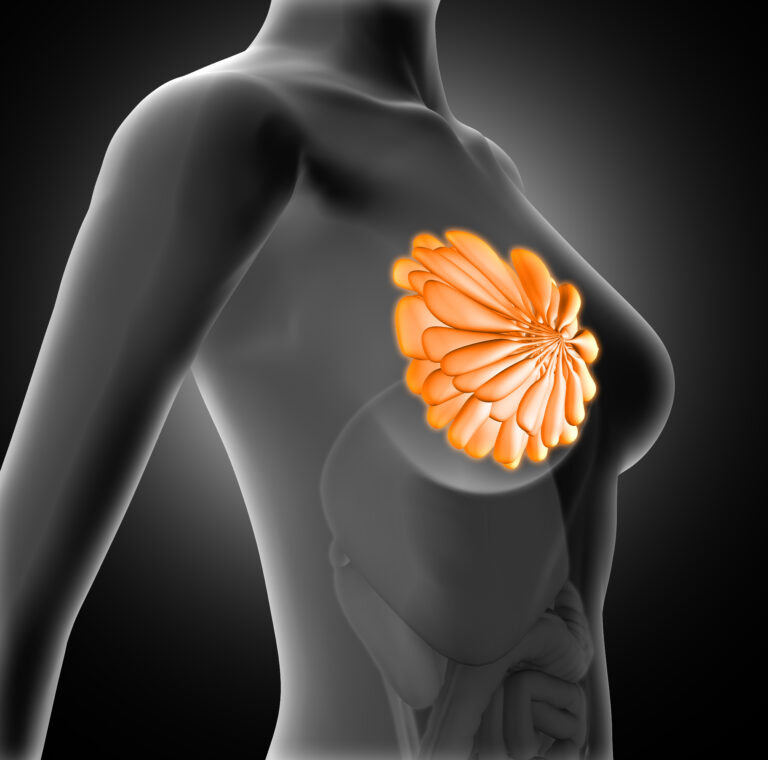

Many women notice that their breasts feel fuller, swollen, or more tender in the days leading up to their menstrual period or during menstruation. While this experience is common, it is not necessarily something that every woman experience from the onset of menstruation. Over time, many women come to regard breast fullness as a normal sign that their period is approaching.
Based on my observations, many women who experience this symptom may have relatively low progesterone levels. Although low progesterone does not automatically mean a woman is infertile, it may increase the risk of miscarriage because progesterone plays a vital role in supporting early pregnancy.
During the menstrual cycle, the hormones estrogen and progesterone work together to regulate reproductive function. At the beginning of the cycle, estrogen levels gradually rise to stimulate the growth of the uterine lining. Progesterone remains relatively low until after ovulation, when it increases significantly. This rise in progesterone prepares the uterus for the possible implantation of a fertilized egg. The body undergoes this preparation each cycle regardless of whether sexual intercourse has occurred.
If fertilization and implantation do not occur, progesterone levels begin to fall during the latter part of the cycle, while estrogen levels also decline, triggering the shedding of the uterine lining and the onset of menstruation.
Some believe that when progesterone levels are particularly low before menstruation, the hormonal imbalance may contribute to symptoms such as breast swelling, fullness, or tenderness. However, breast changes before a period are generally thought to result from the normal fluctuations of both estrogen and progesterone rather than from low progesterone alone. Persistent or severe breast swelling, pain, or other unusual symptoms should be evaluated by a healthcare professional to determine whether an underlying hormonal imbalance or another condition is present.