CAN BLOOD SAMPLES BE COLLECTED ON ANY DAY OF THE MENSTRUAL CYCLE FOR HORMONAL TESTS?
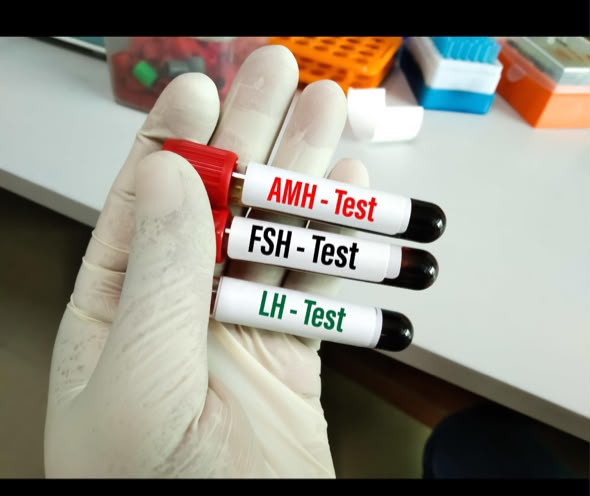
CAN BLOOD SAMPLES BE COLLECTED ON ANY DAY OF THE MENSTRUAL CYCLE FOR HORMONAL TESTS? I want to explain a controversy about the best time to collect blood for hormonal assays. Most of the time, when patients are told to go and run these tests at another center, they may be sent back with the information that the tests cannot be done at any time during the cycle, except on day 2 or 3 of the menstrual cycle, while progesterone should be tested on day 21. I want to tell you that, with the advancement of technology, blood samples for fertility investigations can be collected at different times during a woman’s menstrual cycle and not necessarily only on the days traditionally recommended. However, the appropriate timing still depends on the particular hormone being tested and the reason for the investigation. The reason blood samples were traditionally collected on day 2 or 3 was mainly to assess ovarian function and ovarian reserve—to have an idea of the number of eggs remaining in the woman’s ovaries. FSH and LH were commonly assessed during this period because of their relationship with ovarian function during the early part of the menstrual cycle. Fertility investigations have also advanced with the introduction of Anti-Müllerian Hormone (AMH), which is generally more stable throughout the menstrual cycle and is commonly used as part of the assessment of ovarian reserve. If a patient is being re-evaluated, however, there may be a specific reason why the sample should be collected on day 2 or 3. For example, a patient who is being treated for PCOS/PMOS may be asked to have the test performed on those specific days so that the results can be properly monitored and compared during treatment. Therefore, the timing of hormonal testing should be determined based on the particular test being carried out, the reason for the investigation, and the advice of the healthcare professional managing the patient.
5 THINGS YOU MAY NOT KNOW ABOUT PCOS/PMOS

5 THINGS YOU MAY NOT KNOW ABOUT PCOS/PMOS I want to talk about five important things you should know about PCOS (polycystic ovary syndrome). 1.PCOS is a hormonal and metabolic condition. PCOS can affect hormone levels, ovulation, metabolism, and menstrual cycles. Treatment depends on the individual and their symptoms, fertility goals, and overall health. There is no single hormone level that must be between 1 and 3.5 ng/mL before someone can become pregnant. 2.Do not stop your treatment without medical advice. PCOS is a condition that often requires ongoing management. Stopping medication or treatment on your own may cause symptoms such as irregular periods or hormonal problems to return. Always discuss any changes to your treatment with your healthcare professional. 3.PCOS may require attention when you become pregnant. If you become pregnant while managing PCOS, inform your healthcare professional so that your pregnancy can receive appropriate care. Early pregnancy depends on hormones, particularly progesterone, until the placenta takes over most progesterone production. However, PCOS does not automatically mean that your body cannot produce enough progesterone or that you will have a blighted ovum or miscarriage. Your doctor can determine whether you need any additional monitoring or treatment. 4.Hormone levels may need to be evaluated. If you have PCOS, your healthcare professional may recommend tests such as testosterone or other hormone tests, depending on your symptoms and treatment plan. If testosterone levels are elevated, the underlying cause should be evaluated and appropriate treatment discussed. Management may take time and requires patience and regular follow-up. 5.Having PCOS does not mean you cannot get pregnant. Many people with PCOS become pregnant, either naturally or with appropriate fertility treatment. If you have PCOS and are trying to conceive, working with a qualified healthcare professional can help identify the best approach for managing the condition and supporting your fertility. The important thing to remember is that PCOS can be managed, and having PCOS does not mean that pregnancy is impossible. If you have been diagnosed with PCOS, seek advice from a qualified healthcare professional rather than starting or stopping treatment on your own.
MISCARRIAGE- BLIGHTED OVUM AND MISSED ABORTION

MISCARRIAGE- BLIGHTED OVUM AND MISSED ABORTION I want to discuss missed abortion. Missed abortion refers to a pregnancy that has stopped developing but has not yet been expelled from the uterus. Sometimes, there can also be a difference between the pregnancy age calculated from the last menstrual period and the age estimated by an ultrasound scan. This is because ultrasound estimates the pregnancy age based on what is seen and measured during the scan, while manual calculation is usually based on the date of the last menstrual period. For example, based on your last menstrual period, you may calculate the pregnancy to be four weeks, while an ultrasound may estimate it at five weeks based on the measurements seen during the scan. A difference like this does not, by itself, mean that you have had a missed abortion. A missed abortion occurs when the pregnancy has stopped developing, and the ultrasound findings indicate that the pregnancy is no longer viable. This may happen after a fetal pole and heartbeat were previously seen, but the pregnancy subsequently stops developing. When a pregnancy stops developing at a very early stage and an embryo or fetal pole does not develop as expected, it may be described as an anembryonic pregnancy (commonly called a blighted ovum). When an embryo or fetal pole had developed and a heartbeat was previously detected before the pregnancy stopped developing, it may be described as a missed miscarriage. If you experience symptoms or have been told that you may have a missed miscarriage or an anembryonic pregnancy, please see a qualified healthcare professional. They can confirm the diagnosis and discuss the appropriate and safe management options with you.